Dopdi and Today’s State of Tribal Women
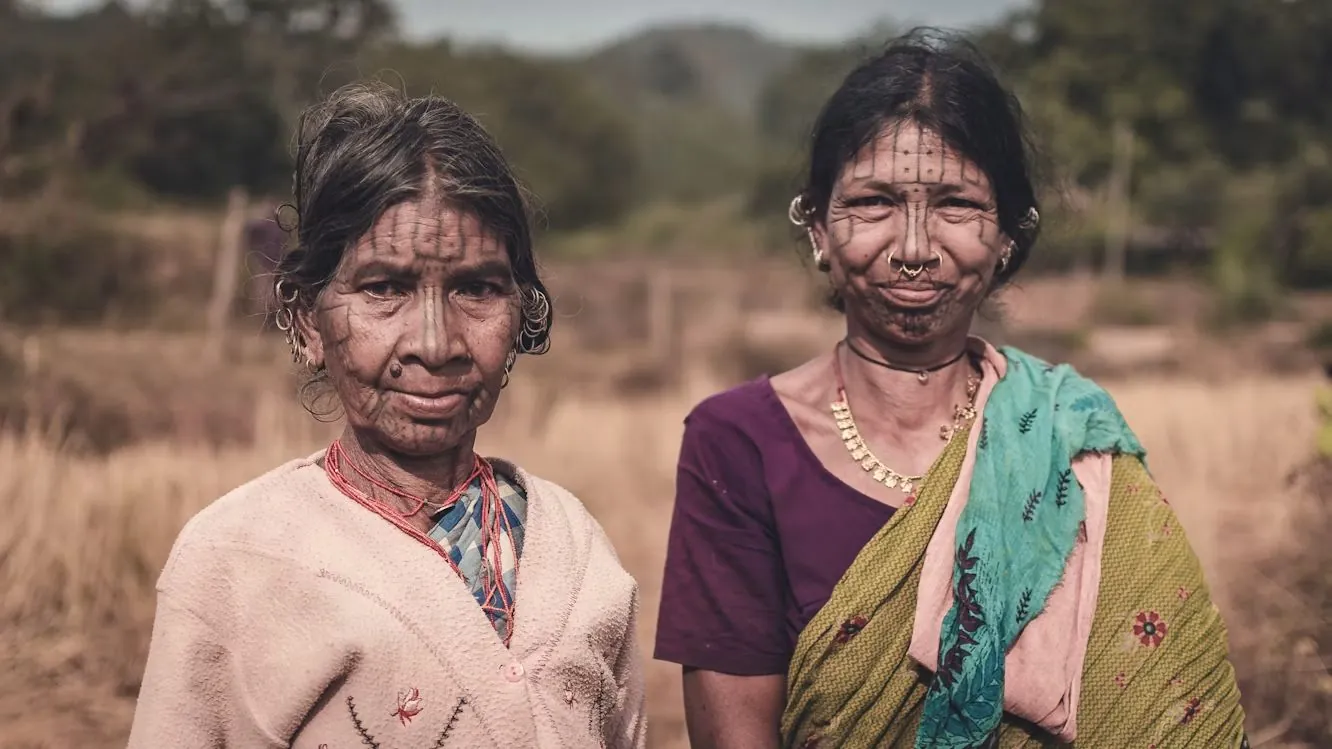
Some characters disappear the moment we close a book. Others refuse to leave. They stay somewhere in the back of our minds, returning unexpectedly when we read about something happening in the real world. Dopdi Mejhen is one such character. Mahasweta Devi’s Draupadi is not a story that allows us to read comfortably and move on. It leaves behind anger, discomfort and, perhaps most importantly, questions. What happens when a woman is treated as though her body, her land and even her voice can be controlled by people more powerful than her? And what happens when she refuses to accept the shame they try to place on her?
Dopdi is a tribal woman caught in a violent political conflict. She is hunted by the state because of her involvement in a revolutionary movement, and when she is finally captured, the violence inflicted on her becomes deeply personal. She is sexually assaulted by the men who hold her captive. It is meant to destroy her dignity and reduce her to someone who has been defeated. But Mahasweta Devi does something remarkable with this moment. She does not allow Dopdi’s story to end with her victimhood.
The final scene is probably the reason Dopdi remains so unforgettable. She is asked to dress herself before being taken to Senanayak, the officer who represents the authority that has captured her. But Dopdi refuses. She walks towards him naked, wounded and completely aware of what has happened to her. The people who assaulted her expected her to feel ashamed. They expected her to hide herself. Instead, she refuses to give them that satisfaction. Her body, which was used as a means of humiliation, becomes a form of resistance.
There is something incredibly powerful in that reversal. Dopdi cannot undo what has happened to her. Mahasweta Devi does not offer the comforting idea that courage can erase trauma. Instead, Dopdi's strength comes from something much more complicated. She refuses to let her attackers decide what her suffering means. She refuses to perform the shame that has been forced upon her.
This is also why it is difficult to read Draupadi only as a story about gender. Dopdi is a woman, but she is also tribal, poor and politically marginalised. Her vulnerability comes from the intersection of these identities. Her story makes us think about how easily certain communities can become invisible when discussions about development, politics or national progress are taking place. Behind words like displacement, land rights and poverty are people whose lives are being changed, often without their consent.
The situation of tribal and Adivasi women today cannot simply be placed inside Dopdi’s story as though nothing has changed. Their experiences are diverse, and there is no single story that can represent every tribal woman in India. Yet many continue to face difficulties connected to land and displacement, education, healthcare, economic opportunities, political representation and gender-based violence. These issues remind us why literature like Draupadi continues to matter. It gives us a language through which we can think about people whose experiences are often pushed to the margins.
What stays with me about Dopdi is that she is not written as an unrealistically fearless woman. She is not powerful because nothing can hurt her. She is powerful because she has been hurt and still refuses to disappear. That distinction matters. We often imagine strength as the absence of vulnerability, but Dopdi complicates that idea. Her resistance grows out of vulnerability rather than existing separately from it.
There is also a larger question hidden inside her story. When a woman is violated, society often focuses on what has happened to her body. We ask whether she will recover, whether she will receive justice, whether she will be able to return to “normal.” But Dopdi forces us to look at something else: who gets to define her after the violence? Her attackers believe they have reduced her. She proves that they have not.
Perhaps that is why Dopdi still feels painfully alive. We may live in a world that has more conversations about women's rights and representation than the world Mahasweta Devi was writing about, but conversations do not automatically erase inequality. There are still women whose voices are heard only after their suffering becomes impossible to ignore. There are still marginalised communities whose problems are discussed more often than their own voices are heard.
Dopdi does not give us a neat ending or an easy lesson. She leaves us with an image that is difficult to forget: a woman standing before the man who believes he has power over her, refusing to cover herself and refusing to look away. In a story where almost everything has been taken from her, she holds on to the one thing her oppressors cannot completely control the meaning she gives to herself.
And maybe that is what makes Dopdi more than a literary character. She becomes a question. How many women are still being told to carry the shame of what was done to them? And how different would the world look if, like Dopdi, they refused to carry it?