Fire (1996): Women, Sexuality and Patriarchy
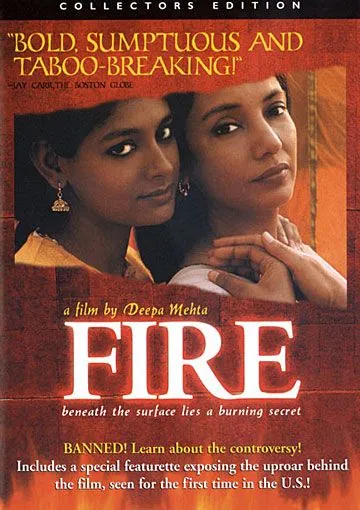
What happens when two women who have spent their lives caring for everyone else begin to ask what they actually want for themselves? Deepa Mehta’s Fire (1996) explores this question through the lives of Radha and Sita, two women living in a traditional Indian household. The film became controversial because it openly discusses female desire and same-sex love, but beneath the controversy is a deeper story about women searching for freedom in a society that expects them to remain obedient.
Radha is married to Ashok, but her marriage is emotionally distant. Ashok has chosen a life of religious devotion and has withdrawn from physical intimacy with her. Sita, meanwhile, is newly married to Jatin. However, Jatin is emotionally involved with another woman and does not give Sita the affection she expects from a marriage.
Both women are therefore surrounded by people, yet they experience loneliness.
Their friendship slowly becomes a source of comfort. They talk, spend time together and begin to understand each other's frustrations. Their relationship eventually develops into love. What makes this significant is not simply that the two women fall in love. It is that their relationship gives them something their marriages have failed to provide: emotional connection, attention and the freedom to express themselves.
The film questions the traditional idea that marriage automatically gives a woman a complete life. Radha and Sita are married, but marriage does not necessarily make them happy. They are expected to cook, care for the household and fulfil their roles as wives, while their own emotional and physical needs are often ignored.
This is where patriarchy becomes important in the film. The women are expected to sacrifice, while the men are given more freedom to make their own choices. Sita’s husband openly maintains a relationship outside the marriage, while Radha’s husband rejects physical intimacy because of his personal beliefs. Yet the women are still expected to remain loyal and silent.
Fire also challenges the assumption that female sexuality should always be controlled or hidden. Radha and Sita are not presented simply as women who are “rebelling.” They are women trying to understand their own desires. Their relationship forces the audience to ask why society is often uncomfortable when women openly express what they want.
The controversy surrounding the film also shows how cinema can become part of a larger social conversation. When Fire was released, its portrayal of a relationship between two women created strong public reactions. The film was not simply being discussed as a work of cinema; it became part of debates about tradition, morality, sexuality and women's freedom.
Yet the film does not suggest that every woman must reject marriage or tradition. Instead, it asks whether women should have the freedom to decide what happiness and fulfilment mean for them.
The title Fire itself can be understood in several ways. Fire can represent desire, anger, transformation and destruction. For Radha and Sita, their relationship brings warmth and emotional connection, but it also threatens the social structure around them.
What makes the film still interesting is that its central question remains relevant: How much freedom does society really give women to choose their own lives?
Fire is therefore not only a film about love between two women. It is also a film about loneliness, marriage, desire and the struggle to be heard. By placing women's feelings at the centre of the story, Deepa Mehta challenges the audience to look beyond social rules and consider the individual lives hidden behind them.