Middlemarch: When Idealism Meets Reality
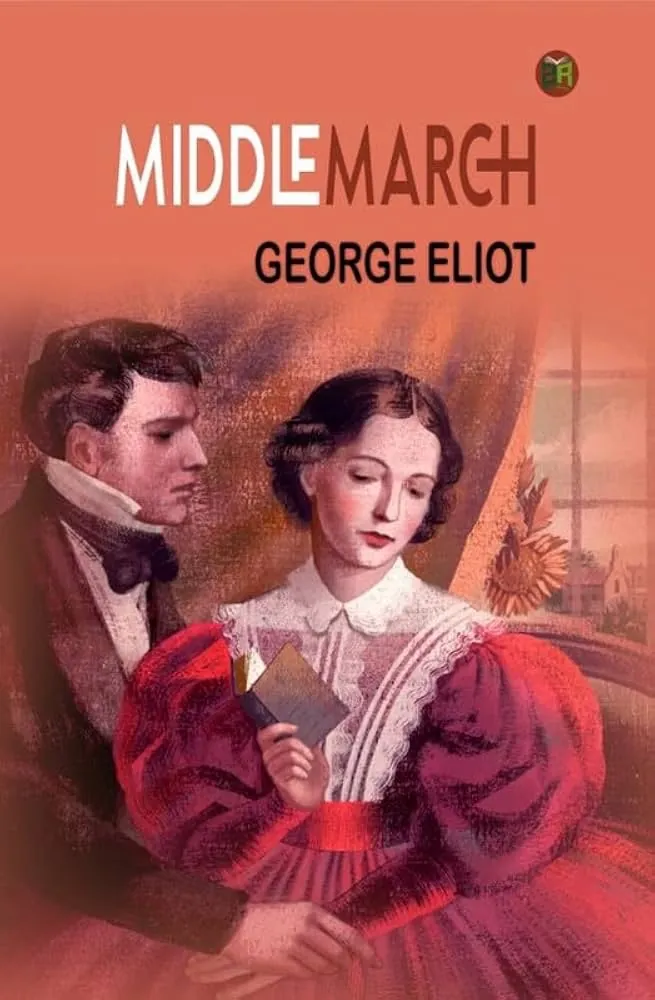
George Eliot’s Middlemarch is a novel filled with people who want more from life than life seems willing to give them. They dream of meaningful marriages, great achievements, intellectual fulfilment and social respect. But the world of Middlemarch rarely allows these dreams to unfold exactly as imagined. This tension between what people hope for and what they actually experience lies at the heart of the novel.
The Idealist’s Dream
Dorothea Brooke is perhaps the clearest example of idealism in Middlemarch. Young, intelligent and deeply religious, she wants her life to have a larger purpose. She does not simply want a comfortable marriage. She imagines herself contributing to something meaningful and believes that Edward Casaubon, an older scholar, can provide the intellectual and spiritual life she desires.
Her expectations, however, are based partly on an idealised image of Casaubon. After marrying him, Dorothea slowly discovers that the man she imagined is very different from the man he actually is. His scholarship has become an obsession, and their marriage leaves her emotionally isolated.
Dorothea’s story shows how idealism can be beautiful but also dangerous when it refuses to recognise reality.
Real People in a Real World
Eliot does not present realism as the opposite of having dreams. Instead, she shows how complicated human beings are. Characters make decisions because of money, social expectations, pride, insecurity and desire.
Take Tertius Lydgate. He arrives in Middlemarch with ambitious plans to become a great medical reformer. He wants to move beyond outdated medical practices and contribute something significant to his field. Yet his ambitions become tangled with financial problems, marriage and social pressure.
His story reminds us that talent alone does not determine a person’s future. Circumstances matter too.
When Dreams Collide with Society
One of the most interesting things about Middlemarch is that its characters are never completely free. Society constantly shapes their choices. Marriage, reputation, wealth and class influence what people can and cannot do.
This is where Eliot’s realism becomes especially powerful. She does not simply say that dreams are foolish. Instead, she asks what happens when individual hopes meet the complicated world around them.
Finding a Balance
Ultimately, Middlemarch suggests that neither pure idealism nor cold realism is enough. Idealism gives people something to strive towards, but realism forces them to understand the consequences of their choices.
Dorothea’s journey is especially important because she gradually learns to see people more clearly. Her maturity comes not from abandoning her ideals, but from understanding the imperfect world in which those ideals must exist.
That may be Eliot’s greatest insight: life rarely turns out exactly as we imagine it. But recognising reality does not necessarily mean giving up on our dreams. Sometimes, it simply means learning how to pursue them with open eyes.