Phrases to Avoid If You Don't Want to Sound Like an AI Bot
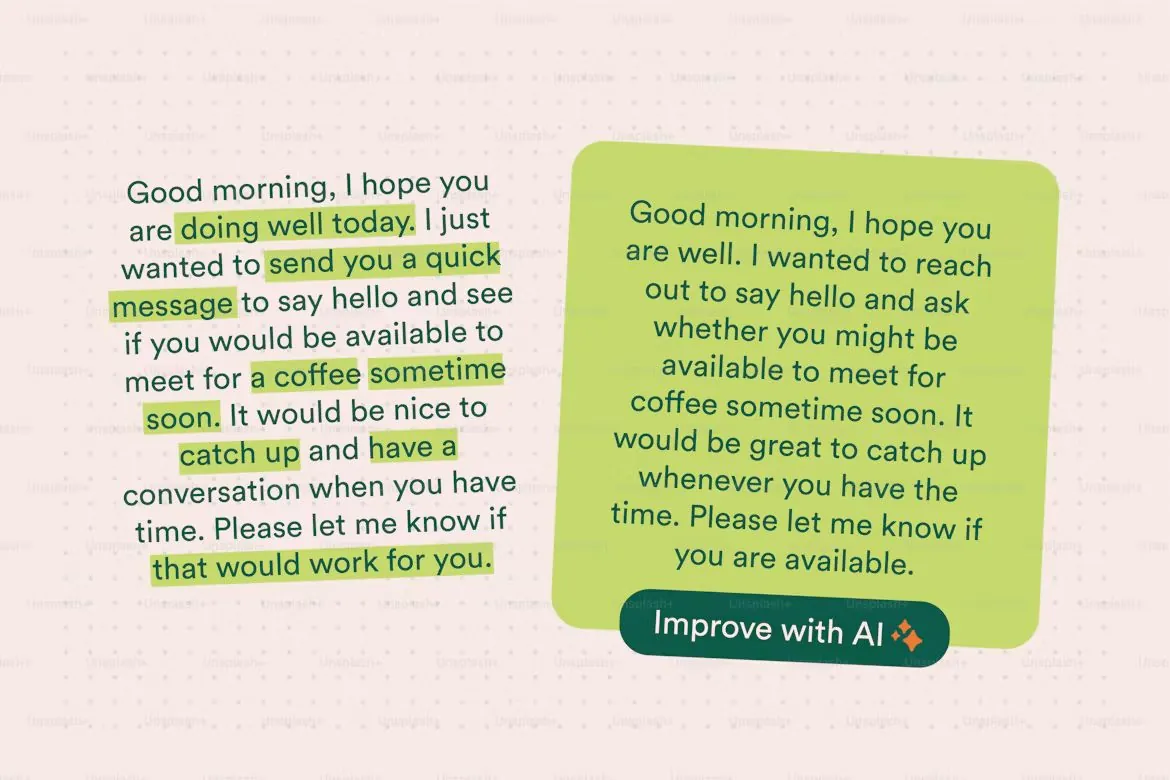
When Every Sentence Sounds a Little Too Perfect
Have you ever read an article that seems grammatically perfect but leaves you feeling unsatisfied? The sentences are all neat and well-structured, and the vocabulary is impressive. Nevertheless, trying to recall any single sentence that could have caught your attention is already problematic.
That is why readers often suspect articles of being generated by artificial intelligence. AI can be an excellent tool for ideation, research, and editing, but most common suggestions contain repetitive phrasing when a writer does not edit the suggestions.
The issue is not that certain phrases are unique to algorithms; people can also employ overused phrases, formal vocabulary, and transitions for unnecessary variety. However, if writing rarely feels natural, the issue stems from the fact that you try to memorise specific banned words. Instead, you should learn why some suggestions are not specific enough and how you can replace them.
1. "In Today's Fast-Paced World"
There is nothing wrong with this phrase, but it serves as an umbrella term for articles about technology, productivity, and lifestyle. This phrase can be replaced with something shorter and more specific that already hints at the article's direction.
"In today's fast-paced world, technology plays an important role in our daily lives."
"The sentence tells the reader almost nothing. Which technology? What role? Why should they care?"
"Most of us check our phones before we have even finished our morning coffee."
The first example tells a reader nothing beyond the obvious fact that technology exists and is useful, but the second sentence immediately puts the reader in context. The lesson: Focus on situations, observations, and problems, and let those dictate your article's direction.
2. "It's Important to Note That..."
This phrase tends to introduce information that should be obvious to the reader or does not need additional emphasis.
Instead of saying "It's important to note that not every writer earns money from their first newsletter," you can write "Most writers do not earn money from their first newsletter."
Of course, there are instances where you need to specify the importance of a statement. Nevertheless, if every paragraph begins with a phrase that indicates emphasis, any writing will begin to sound robotic. The lesson: Give the reader the information they need without beating around the bush.
3. "Delve Into" and "Unpack"
There is nothing wrong with either of these suggestions; however, they tend to be used in contexts discussing detailed research.
"Let's delve into the reasons readers love romantic fiction" is significantly more specific than "let's explore why readers love romantic fiction."
Similarly, "let's unpack the challenges of creative writing" can be replaced with "let's look at what makes creative writing difficult."
Both phrases suggest that an explanation will occur, but the latter two sentences are better because "explain" is already a form of unpacking or delving. The lesson: Replace generic terms such as delve or unpack with more specific verbs, depending on the context. Examine, explore, compare, contrast, question, and investigate are some verbs that you can try.
4. "In the Ever-Evolving Landscape of..."
This phrase attempts to make mundane subjects sound more exciting, but it often fails because it is best suited for speeches or articles discussing abstract topics.
"In the ever-evolving landscape of digital communication, writers must adapt to emerging trends."
"A more natural phrasing could be "Online writing keeps changing; therefore, writers need to understand where their readers spend their time."
The second example is significantly easier to read and understand because it is less convoluted. The lesson: Do not make simple subjects sound more complex than they are.
5. “Not Only… But Also…”
This construction can be helpful for emphasis, but it does not differ from writing one sentence in a different structure if the phrase appears in nearly every paragraph.
"Reading not only improves vocabulary but also develops critical thinking, strengthens imagination, and enhances emotional intelligence."
This sentence may be true, but it could simultaneously be infinitely more specific. Instead of listing several benefits, focus on one benefit and support it with a personal insight or additional information.
"Reading introduces us to unfamiliar words, but its greatest influence may be the way it teaches us to understand perspectives beyond our own." The lesson: Always vary sentence structures and do not feel as if you need to use parallelism if you are not writing an essay or a speech about parallelism.
6. "A Testament to..."
Calling something "a testament to" its value is a clever way to imply that something significant has happened without stating any specifics.
"Her success is a testament to her determination."
The reader could immediately guess that dedication played a significant role, but it is better to give the reader reasons to reach that conclusion themselves. Replace generic praise with specific evidence.
"She spent three years revising the manuscript before a publisher accepted it."
The second example provides the reader with specific information. They can now visualise what dedication entailed and have a better understanding of what led to the protagonist's success. The lesson: Whenever possible, replace unsubstantiated praise with specific details.
7. "It's Worth Mentioning That..."
This phrase always seems to appear when there is not enough information in a sentence before the period.
"It's worth mentioning that many readers prefer shorter newsletters."
"Many readers prefer newsletters they can finish during a short break."
The second example is more specific and informative.
Of course, longer sentences are necessary, depending on the context, but you should always strive to utilise sentence structure to your advantage. The lesson: Avoid using introductory phrases when they offer the reader no new information beyond what the sentence already contains.
8. "In Conclusion" and "Ultimately"
These phrases are not inherently problematic. However, they tend to be overused when concluding paragraphs, especially when one always needs to remind the reader that they are at the end of an article.
"Ultimately, literature continues to play an important role in our lives."
This sentence is far too generic to appear in any article about reading. A better concluding sentence may be something like "Perhaps we keep returning to certain books because their characters help us understand feelings we have never known how to explain." The lesson: Complete your thoughts rather than announcing to the reader that you are concluding your thoughts.
9. "This Highlights the Importance of..."
This phrase often appears when a writer wants to discuss the meaning of their chosen example but does not yet know how to utilise it.
"This highlights the importance of consistency in content creation."
What does being consistent change? Does it allow readers to know when to expect a new article? Does it help the writer be more consistent in developing their ideas? Does it instil a sense of reliability in the reader? The writer should highlight exactly what the example proves.
"Publishing every Friday gives readers a reason to return and helps the writer maintain a regular writing habit."
Now, the writer has turned a generic statement into a more specific fact. The lesson: Any time you write a sentence beginning with something such as this highlights, this proves, or this suggests, be aware that you need to specify exactly what your example can prove.
10. "In a World Where..."
This phrase can occasionally be helpful for establishing context in fictional writing, but it is better to omit it when describing problems that modern society faces.
"In a world where attention spans are shrinking, writers must learn to create engaging content."
"A more natural phrasing could be "Readers often decide within seconds whether an article deserves their attention." The second suggestion immediately creates context and is therefore a superior replacement. The lesson: The best place to begin an article is wherever you want to conclude it.
How to Make Your Writing Sound More Human
Avoiding these overused phrases is only one part of making your writing sound more natural. Articles or essays can be devoid of these phrases and still appear robotic. Good writing always originates from one's ability to make specific claims based on observations, data, and analysis.
The following tips can be useful:
Always use specific details whenever possible. Vary sentence structure for rhythm and emphasis. Support specific claims with the best evidence possible.
Do not always begin paragraphs with transitions. Read your work out loud and continue editing when it feels natural to say. If you use AI to assist you in writing, view its suggestions as research. Never utilise clichés or overused terms. These terms always originate from being overused, after all.
You can view this list as a reference, but your best writing will always come from asking better questions about your writing. If you always ask the better questions, the answers will always appear when you least expect them.
Your Voice Matters More Than a List of Forbidden Words
There is no list of phrases that definitively prove that an article was written by AI. The same can be said for humans, who often utilise clichés, formulaic writing, and repetitive word choice. Some of the most famous speeches and articles were written by people who did not always follow "rules," and excellent writing does not always utilise complex sentence structures or formal vocabulary.
Ultimately, it is always essential to ensure that a piece of writing communicates your idea effectively to your intended audience. Even one word can make an enormous difference in clarity or precision. A short sentence can feel powerful and impactful when it contains specific information, whereas a long sentence may be necessary to fully explain a concept.
The next time you are editing an article, always consider asking yourself better questions about your writing instead of asking "does this sound like AI?" That better question may be something as simple as "does this sentence say something meaningful and in the best way possible?"
Reference: https://owl.purdue.edu/owl/general_writing/academic_writing/essay_writing/index.html