Rivers are Calling
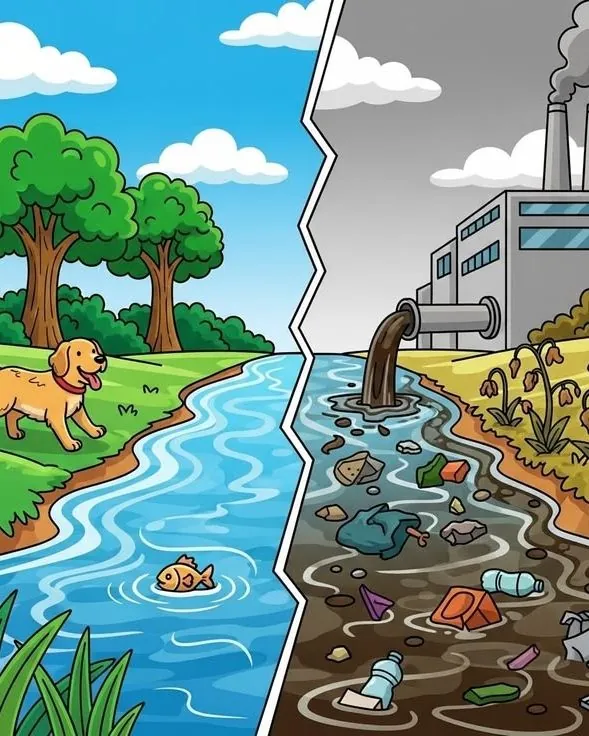
Emerging from the snow-clad Himalayas, a river is born. Finding her way through the rugged terrain, she begins her journey from the mountains' solid, unyielding embrace. She carves her path through ancient rocks and mighty cliffs, overcoming the tremendous hardships of her course. She endures the harshness of nature, yet carries within her an extraordinary purity—a quiet strength that refuses to surrender.
Once small, yet fierce and untamed, she flows onward. As she travels farther from her birthplace, she grows broader, calmer, and more graceful. The restless force of her youth gives way to a gentle rhythm, carrying with it the innocence of a heart untouched by the cruelty of the world.
Leaving behind the mountains she once called home, she journeys towards humanity, hoping to breathe life into the lands she touches. She nourishes the soil, sustains countless living beings, and quenches the thirst of millions. She gives us water, food, livelihoods, and life itself. Without hesitation, she offers pieces of herself so that we may continue to exist.
And in return, what does she ask of us? Nothing extravagant. Only love. A little care. A little kindness. The respect she so selflessly deserves.
Yet, do we protect her? Do we nurture her as she nurtures us?
No. Far too often, we do the opposite.
Taking her generosity for granted, we repay her kindness with betrayal. The very hands that reach into her waters for survival become the hands that poison them. Industrial waste, untreated sewage, plastic, and countless other pollutants invade her once-pristine waters. The river that gives life is forced to carry the burden of our negligence.
How cruelly we have mistaken her patience for weakness.
In India, where rivers are revered as sacred and worshipped in the form of goddesses, the pollution of our waterways reveals a painful contradiction between our beliefs and our actions. The Ganga, affectionately known as Mother Ganga, holds a profound place in our mythology, spirituality, and cultural identity. She is more than a river; she is a symbol of faith, purity, and life. Yet, despite the reverence we express towards her, several stretches of this sacred river continue to suffer from severe pollution.
Industries release untreated or inadequately treated effluents into waterways. Sewage drains empty their contents into rivers, while plastic and other solid waste accumulate along their banks. Poor waste management and irresponsible human activities further threaten the delicate balance of aquatic ecosystems. The consequences extend beyond the river itself, endangering the countless lives that depend upon her waters.
How much pain must this innocent soul endure? How much poison must she carry before we finally hear her silent cry?
And when nature responds to the damage we inflict upon the environment, we are quick to lament our suffering. Floods devastate homes, landslides destroy settlements, and droughts leave communities struggling for water. Although such disasters arise from a complex interplay of natural processes, human activities—including deforestation, encroachment upon floodplains, unsustainable development, and environmental degradation—can intensify their consequences.
We cannot blame every calamity on our own actions, but neither can we ignore the damage our actions cause. Nature is not an enemy seeking revenge; it is a delicate system whose balance we disturb at our own peril. When we wound the environment upon which our survival depends, we inevitably put ourselves at risk.
The time for indifference has passed. The time for action is now.
We must strengthen the enforcement of environmental laws, ensure the proper treatment of industrial effluents and sewage, and prevent the careless disposal of waste into our rivers. Cleanliness campaigns and river-cleaning drives must go hand in hand with sustained public awareness, responsible consumption, and effective waste management. We must learn to reduce our dependence on single-use plastics, dispose of waste responsibly, and recognise that even the smallest individual action can contribute to a greater change.
Most importantly, our reverence for nature must extend beyond rituals and words. Worship means little if our actions contradict the very values we claim to uphold. If we call her Mother Ganga, we must treat her with the love, dignity, and protection that a mother deserves.
It is our turn now—to protect, to restore, and to nurture the very nature that has nurtured us since the beginning of time. Let us not wait until our rivers fall silent, until their waters become unfit to sustain life, or until the beauty we inherited becomes nothing more than a fading memory. For every river that flows, a thousand lives flourish. And for every river that suffers, a thousand lives stand threatened.
Remember, nature does not need us to survive; we need nature to survive. Every action has consequences. Every careless act leaves a mark, and every responsible choice holds the promise of change. Let us choose kindness over neglect, responsibility over convenience, and preservation over destruction.
Let us give our rivers a reason to flow freely once again—not through a world of indifference, but through a world that finally understands their worth. Because a river is not merely a stream of water carving its way through the earth. She is life in motion, a mother without a voice, and a gift we have no right to destroy.
Let us protect the rivers before our silence becomes the reason they can no longer sing.