The Interview with Nalini Jameela: Sex Work, Voice and Society
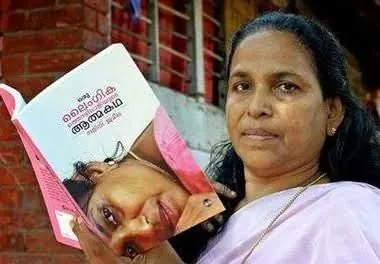
When society talks about sex workers, it often talks about them rather than allowing them to speak for themselves. This is what makes an interview with Nalini Jameela important. A former sex worker and writer from Kerala, Jameela has spoken openly about her experiences and challenged the way society usually sees women involved in sex work.
Her story becomes interesting because she does not present herself only as a victim. She speaks about her life, her work, her relationships and the choices she made in her own words. This creates a different way of looking at sex work. Instead of seeing a woman through a label, the interview encourages us to see the person behind it.
Society often places people into simple categories. A woman is expected to be a respectable daughter, wife or mother. When someone moves outside these expectations, she can quickly become the subject of judgement. Sex workers especially face this kind of social judgement because their profession is connected with sexuality, something society often prefers not to discuss openly.
Jameela's willingness to speak challenges this silence.
One of the most important aspects of her voice is that she does not allow other people to completely define her experience. She talks about sex work as part of her life rather than allowing it to become her entire identity. She also speaks about the practical realities surrounding the profession, including relationships, money, safety and social attitudes.
This makes the interview different from a fictional film. In cinema, a director creates a character and an audience watches that character's story. In an interview, the person gets the opportunity to tell her own story. That difference matters. Jameela's voice becomes the centre of the discussion.
Her story also raises questions about women's economic independence. Many women enter difficult forms of work because of financial circumstances and limited opportunities. Therefore, discussing sex work only through morality can hide the larger social and economic conditions surrounding women's lives.
At the same time, Jameela's experiences do not mean that every sex worker has the same story. Her voice represents her own experiences and perspective. This is important because society often tries to speak for entire groups using one common narrative. Listening to individual experiences can reveal how complicated these lives actually are.
The interview also makes us think about the relationship between sexuality and respectability. A woman's sexuality is often judged differently from a man's. Men may receive social freedom for behaviours that can bring harsh judgement upon women. Jameela's willingness to discuss sexuality openly therefore becomes a challenge to these double standards.
What makes her story powerful is not simply the fact that she worked as a sex worker. It is her decision to speak about a subject that many people would rather keep hidden. Her voice creates space for conversations about work, gender, sexuality, poverty, choice and dignity.
Ultimately, the interview asks us to reconsider what it means to judge another person's life. We may have ideas about what a respectable life should look like, but individual lives are often much more complicated than those ideas suggest.
Nalini Jameela's story does not ask the audience to agree with every decision she made. Instead, it asks us to listen. And sometimes, listening without immediately judging can be the first step towards understanding.
In that sense, her interview becomes more than a conversation about sex work. It becomes a conversation about who gets to tell a woman's story. By speaking in her own voice, Jameela moves from being someone society talks about to someone who gets to define herself. https://share.google/IKaex3qlqlvqnMJz9