The Rise of Anti-Heroes in Indian Cinema
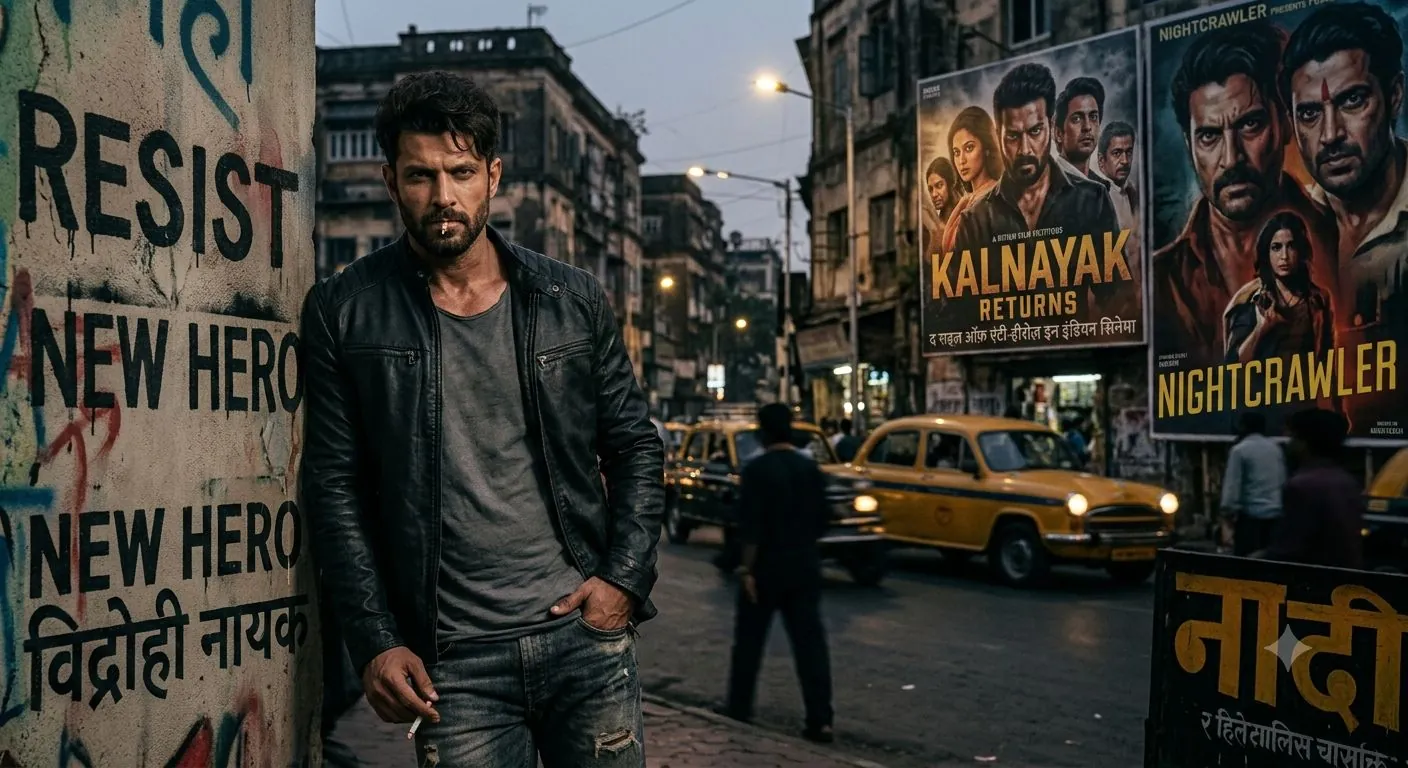
From the Perfect Hero to the Anti-Hero
For decades, there was a certain prototype of a hero that Indian cinema was comfortable featuring in its films.
He was brave, strong, moral, and had a clear sense of right and wrong. He would always fight the villain and save the world or the girl he loves from certain doom. He would eventually find his happiness in a well-defined manner. However, the modern viewer is becoming more interested in characters that do not fit this ideal mold.
That is how the anti-hero was born.
An anti-hero is not a villain, but he often acts like one.
He may be corrupt or engage in corrupt activities, be rude, violent, narrow-minded, or abusive. He can be hard to understand, but sometimes likable and supportive. There is no definitive moral compass in an anti-hero; sometimes, we are angry with him, and sometimes sympathetic.
Indian cinema has been interested in the anti-hero type for many years, but the modern movies seem to have gained more confidence in using this character archetype.
The characters of Kabir Singh, Pushpa, or Rocky from KGF are prime examples of an anti-hero in Indian cinema. They do not conform to the traditional idea of a hero, and they are certainly not villains. They are all corrupted, obsessed, arrogant, rude, or abusive in their own way. Still, viewers may sympathize with them or at least find some redeeming qualities in them.
Why Do We Connect With Flawed Characters?
It is hard to say what attracts us to the anti-heroes. Maybe there are no perfect people in the first place.
Our loved ones can behave badly, too be rude, selfish, and arrogant. They can be obsessed with insignificant things and abuse their loved ones for their own sake. The anti-heroes of Indian cinema present us with the mirror of our own lives, which are far from perfect.
The modern viewer is more interested in complex protagonists that can represent a wide range of qualities, good and bad.
The Indian society is changing, and so is its cinema. More and more people are learning about other cultures through movies and series, and there is less need to resort to the same stereotypical characters to portray them. Violent and corrupt anti-heroes are becoming more popular in Indian cinema because society is becoming more interested in the problems of other cultures that these characters come from. There is also a greater audience that can relate to this kind of storyline.
When the Hero Is Neither Right nor Wrong
The modern audience is also rethinking its relationship to the moral compass of the protagonists in cinema.
Asking what is wrong or right is one thing but judging someone for being corrupt or abusive is another. It is hard to separate an actor from the role he is playing; therefore, a lot of moviegoers argue that a film is not just in what the protagonist does but in how he is judged by the audience.
When we see a violent and abusive person on screen, we do not want to celebrate or follow him, but we also cannot entirely condemn him.
Interpretation plays a big role in art, and cinema is not an exception. Two people can watch the same movie and look at its protagonist through different lenses. One person may see an anti-hero, and another may see a villain. Some may find it hard to sympathize with him, while others find his actions in the film entirely reasonable. If the modern viewer wants the roles to be more realistically portrayed in cinema, he certainly got that with the anti-hero.
We may not judge others for their actions as much as we used to, but we do care about morality and what bad things people do.
It is up to us to define what is right and what is wrong. The anti-hero is not right, and he is not wrong. He is complicated. Not many people are one thing or the other, so why judge those who are not exactly like us?