The Story Behind Mural Architecture: When Walls Become Works of Art
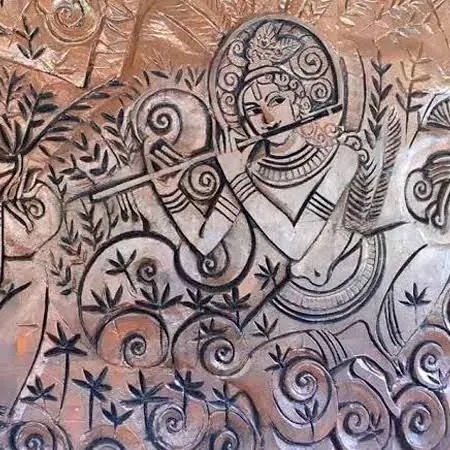
More Than Just Paintings on Walls
Imagine an ancient temple, where every surface recounts a tale on stone walls; a palace – a monument of majesty and royal lifestyle; or a cave – with its ceiling telling us about the times long gone. Mural art is the art of storytelling through architectural surfaces.
A mural is a painting on a permanent surface, typically a wall or ceiling. As distinct from a painting, which is a separate entity, a mural is a painting that uses building walls as its necessary element. Painted images can represent mythology, religion, history, nature, people’s lives, or certain aspects.
Mural architecture combines two art types architecture and painting. While the former provides the latter with a picture frame, the buildings acquire additional meaning through the images painted on them.
The Ancient Origins of Mural Art
The art of mural painting has a very ancient history. The first known paintings were created by primitive societies, which interpreted the world around them with the help of art.
In India, the ancient art of mural painting finds its reflection in the Ajanta Caves in Maharashtra. This location is considered to be one of the earliest examples of mural painting in the world. Cave temples with exquisite frescoes and sculpture groups are the result of the work of artists and architects.
Ajanta Caves were painted in two different periods the II century BC and the V and VI centuries AD and have a long history of exploration. Mural paintings depict tales linked to the Buddha, Jataka images, and tales, as well as various narrative compositions, framed decorations, and human figures.
The unique combination of antiquity and artistry makes India one of the most influential countries in the field of mural paintings.
The Kerala School of Painting: A Tradition of Mural Decorations
The tradition of painting on temples, palaces, and churches’ interiors in Kerala might be traced back to the XV-XIX centuries. However, its origin is much older. Local artists managed to create a unique style of mural painting, which can be observed in Kerala’s modern paintings.
Symbols, characters from Indian folklore, floral patterns, and intricate lines are often found in the works of local artists. What is more, this school is also closely related to ancient history and Indian temple architecture. Painters used traditional natural paints and created compositions that matched the shapes of ceilings and walls.
It may seem that these artists were not painting scenery; instead, they were decorating the building’s interior in accordance with its architectural features.
How Mural Architecture Differs: Some Notes on Meaning
Mural architecture is fascinating in terms of the interrelation between the building’s features and the painting’s narrative. Several characteristics help distinguish this type of art:
1. Correspondence with the architectural context.
2. The conveyed meaning, which may relate to religion, history, or culture.
3. The impact of color and design on the building’s spatial structure.
4. Preservation and transmission of culture’s values.
It is this unique combination of features that makes mural art different and worthy of being preserved.
Mural Monuments: A Threat of Being Lost?
Ancient temples, with their walls decorated with vivid colors and narrative-free depictions, may be fragile in terms of preservation. Indeed, there are plenty of environmental factors that may damage the surface of buildings. Therefore, any changes made to the surface of a building may alter the meaning of mural paintings. Mural art requires the delicate and experienced hands of restorers.
In India, Ajanta Caves were included in the UNESCO World Heritage List. This helped to raise awareness about the significance of the ancient site and its fragile paintings.
At present, there are plenty of ways to maintain and pass on the unique traditions related to mural architecture. Apart from restoration activities, art education, modern wall-painting practices, and the adaptation of these practices in the contemporary architecture discourse play an important role.
When Architecture Talks and Listens to People
The art of storytelling through mural architecture is definitely worth exploring. It is fascinating to observe how different cultures interpret the concept of a building decorated with unique pictures on its surface. Be it the Ajanta Caves in India or the Kerala School of Mural Decoration they all amaze us with their beauty and the meaning conveyed.
A quiet wall, a silent building these are the things that rarely draw our attention. Yet, the art of mural architecture turns architecture into stories, which can last for centuries after the people who created them have left.
https://whc.unesco.org/en/list/242
https://www.keralatourism.org/kerala-article/2015/mural-paintings-kerala/549