Waiting for Godot Was Never About the God
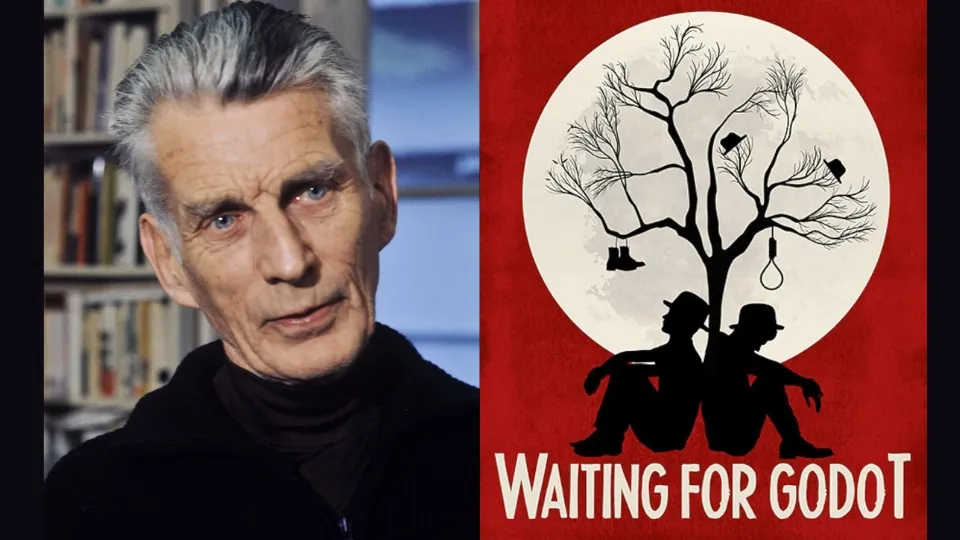
Two men are waiting. They do not know exactly when he will come, where he is, or even what he really looks like. Still, they wait. They talk, argue, joke, think about leaving, and then stay. This is the strange world of Samuel Beckett’s Waiting for Godot.
At first, the title makes us think that Godot must be someone important. Maybe he is God. Maybe he is a person who will change everything. Maybe he is the answer to all the questions the characters have. But Beckett never gives us a clear answer. And perhaps that is exactly the point. Waiting for Godot was never really about Godot. It was about the act of waiting.
Vladimir and Estragon spend most of the play waiting for Godot. Every day seems to look almost the same. They wait beside a tree, talk about leaving, decide to stay, and receive a message that Godot will not come today but might come tomorrow.
Tomorrow never seems to arrive in the way they expect.
This is where the play becomes more interesting than a simple story about two men waiting for someone. We have all waited for something in our lives. A result. A phone call. A person. A better opportunity. A change that we believe will finally make things different.
Sometimes we tell ourselves, “Once this happens, everything will be better.”
That is the kind of waiting Beckett explores.
Godot can be seen as a symbol of whatever we believe will give our lives meaning. For one person, it might be success. For another, love. For someone else, money, recognition, a dream job, or simply a better tomorrow.
The interesting thing is that Beckett never tells us what Godot represents. He leaves that space empty, allowing every reader and viewer to fill it with their own meaning.
This is also why the play is often connected with the Theatre of the Absurd. The characters search for meaning in a world that does not give them clear answers. They keep repeating things. They forget things. They make plans but rarely act on them. Their conversations can be funny one moment and deeply sad the next.
And that is what makes the play feel surprisingly human.
Vladimir and Estragon are not completely different from us. How many times do we complain about our situation but remain in the same place? How often do we say we will start something tomorrow? How many times do we wait for the “right time” before actually doing something?
The tree beside which they wait also becomes important. It changes slightly, but not enough to completely change their situation. It gives us the feeling that time is passing, even though nothing much is happening.
Perhaps the most uncomfortable idea in the play is that waiting itself can become a way of living.
We can become so focused on what is coming next that we forget to experience what is happening now.
Vladimir and Estragon keep believing that Godot will eventually arrive. His arrival is always somewhere in the future. Because of that, their present becomes nothing more than a waiting room.
Beckett does not give us a comfortable ending either. Godot does not arrive. Instead, the cycle continues.
But maybe Godot was never supposed to arrive.
Maybe Beckett wanted us to ask ourselves what we are waiting for.
Are we waiting for someone to save us? For life to become easier? For success to make us happy? For tomorrow to give us the courage that we refuse to find today?
That is why Waiting for Godot remains relevant even decades after it was written. The world around us has changed, but waiting has not.
We still wait for things we cannot control. We still create hopes around uncertain futures. We still convince ourselves that something outside us will eventually make sense of everything.
Godot may be God. He may be hope. He may be meaning. He may be nothing at all.
Beckett does not tell us.
And perhaps the most important part of the play is not who Godot is, but what happens to us while we are waiting for him.