When Lyrics Become Literature
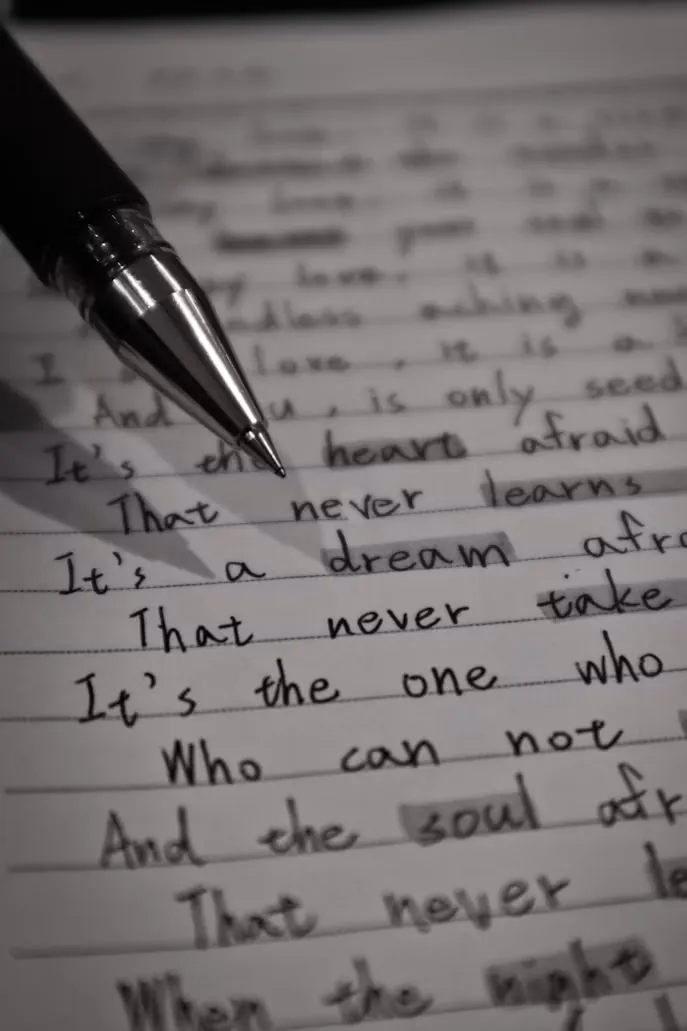
We often say songs are ‘speaking to us’, but what makes certain lyrics memorable long after the music dies down? A line of a song can capture devastation, longing, desire, frustration, or hope so well that we keep recalling it long after the music has finished. We could still recall a lyric after many years, but we might not remember where we first heard it. This is where music and literature intersect, as are the ideas about what makes lyrics unique. Can lyrics exist simply as words written for music, or can they also be regarded as literature?
The Thin Line Between a Song and a Poem
The connection between poetry and song is hardly new. Long before recorded music, people told, sang, performed, and passed poems, tales, fables, and folklore from one generation to the next. Ballads, folk songs and oral traditions have long blurred the boundary between literary expression and music.
Song lyrics share many of the devices we expect to find in poetry: rhyme, rhythm, repetition, imagery, metaphor, symbolism and wordplay. A lyric does not always tell us something explicitly. It often suggests and leaves the audience to complete the image.
Academic discourse around song lyrics increasingly treats them as objects worthy of literary analysis. The Poetics of American Song Lyrics, edited by Charlotte Pence, presents a collection of scholarly essays that examine songs through the lens of literary devices, ranging from folk, blues and rock through to hip hop, country and other genres.
When Words Need Music
At the same time, lyrics are not quite the same as poems. A poem can be written to exist independently on the page, while a song lyric is designed to interact with the music, rhythm and performance. This is not to say that a lyric written on a page does not carry its own meaning, but it is often the interaction with the music that gives a lyric its extra depth.
Scholar Jahan Ramazani’s work on poetry and song lyrics demonstrates this very connection, as well as acknowledging that the two art forms have a long history of interaction but also highlights the differences between them. Song encompasses both words and voice in a way that conventional printed poetry does not.
Lyrics Can Tell Stories Too
Some lyrics function like miniature stories. They feature characters, explore a setting, and can move from one idea to the next in a matter of minutes, encapsulating a whole life or experience.
Consider the storytelling conventions of folk and country songs, protest music, or the devices used in rap lyrics. A song can record an experience of an individual, while also reflecting a wider set of events and the culture surrounding them.
This is especially true for genres such as hip hop, which employ the literary devices of the written word in their very construction. The literary merits of rap lyrics have been the subject of much scholarly debate, with the discussion encompassing what does and does not deserve to be considered literature.
The Case for Reading Lyrics as Literature
The idea of treating lyrics as literature is not suggesting that any song equals any poem. It simply means analysing the writing from a literary point of view.
A good lyric can possess ambiguity, use symbolism and metaphor, present narrative and character, invoke cultural and historical references, and utilise the literary devices expected of poetry. It can make us reconsider our relationships, recollect our lives, or look with fresh eyes at a particular moment.
Recent scholarly works have begun to examine song lyrics as a literary genre that uses elements of poetry and prose, as well as exploring their relationship and its evolution in the modern world of internet publishing and online lyric archives. Perhaps the most intriguing aspect of song lyrics is that they occupy a space between two mediums, existing on the page as literary devices and constructing a piece of work that combines music and voice with other senses, memories, and feelings.
Maybe this is why we not only listen to certain songs. We also remember the words to them.
References
https://academic.oup.com/mississippi-scholarship-online/book/24312?utm_